Understanding Policy Continuity Across Political Parties
In parliamentary systems like Canada’s, changes in government do not always result in major shifts in underlying financial or institutional frameworks. While political parties differ on social, cultural, and regulatory issues, they often operate within the same broader economic architecture. This section explores how long‑term fiscal patterns can persist across different administrations, regardless of which party forms government.
A Structural View of Policy Continuity
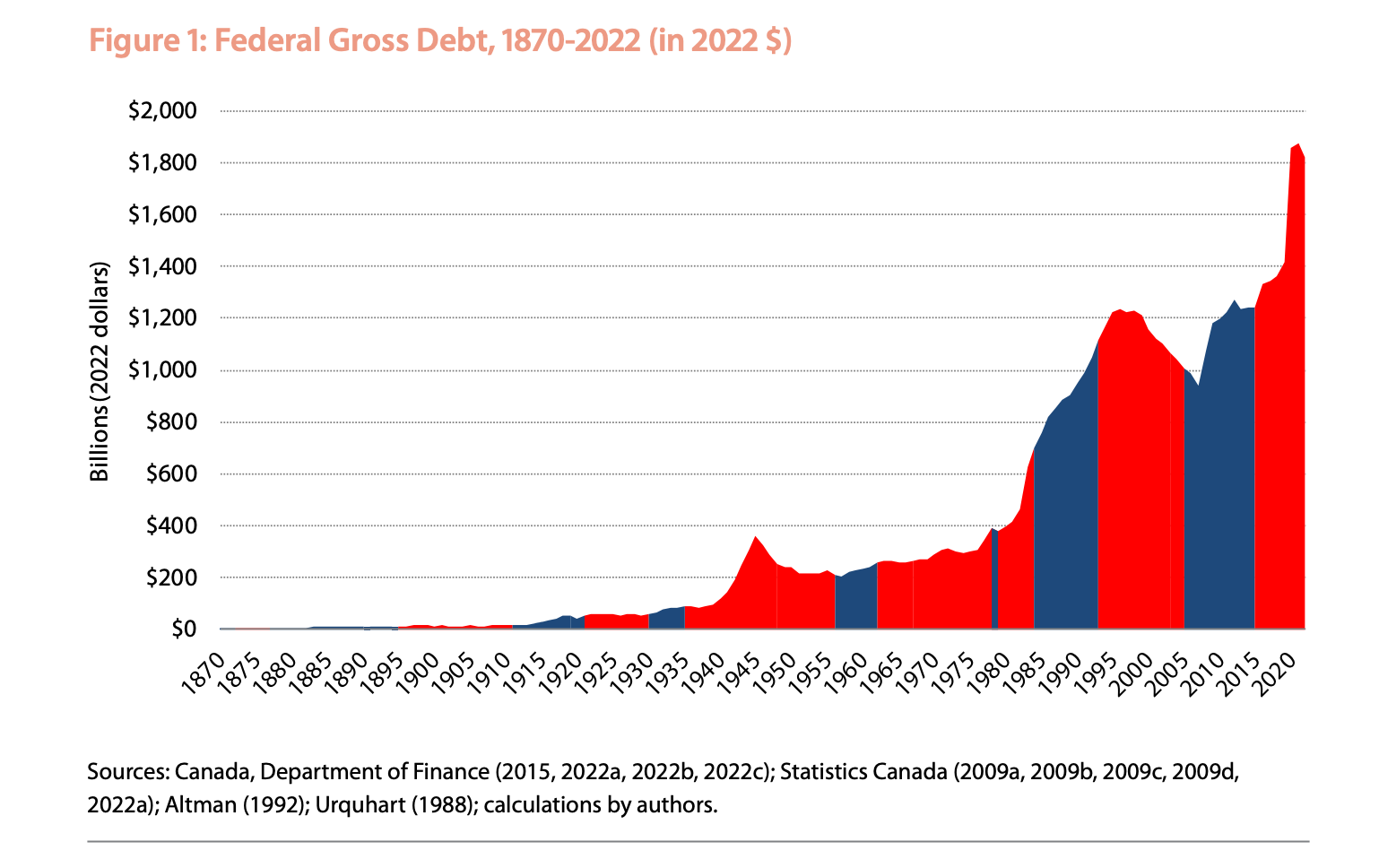
Historical data on Canada’s federal gross debt — from Confederation to the present — shows a long‑term upward trend that spans multiple political eras. This pattern suggests that debt growth is influenced less by individual party platforms and more by broader structural factors, including:
global economic cycles
interest‑bearing financing models
institutional incentives within parliamentary systems
the 1974 shift toward private capital markets
This perspective does not assign blame to any party. Instead, it highlights how financial systems can create continuity across different governments.
Interpreting the Debt Trend
The long‑term debt trajectory can be understood through several structural observations:
A Shared Framework: Both major parties have governed within the same interest‑bearing debt model since the mid‑1970s, resulting in similar long‑term fiscal patterns.
Institutional Momentum: Once a financing model becomes established, reversing it can involve navigating complex economic, legal, and diplomatic considerations.
Policy Scope: Many fiscal outcomes reflect global conditions, demographic pressures, and inherited commitments rather than short‑term political decisions.
These points help explain why the debt trend line remains relatively consistent across different administrations.
How Political Debate Interacts With Structural Issues
Public political debate often focuses on social and cultural issues, which tend to generate strong opinions and clear distinctions between parties. Structural financial questions — such as long‑term debt management or the design of public financing systems — receive less attention, even though they shape national budgets over decades.
This dynamic is not unique to Canada. Many democracies experience a similar pattern, where high‑visibility issues dominate public discourse while low‑visibility structural issues continue with broad cross‑party continuity.
Why the Cycle Persists
The persistence of long‑term debt growth reflects a combination of:
reliance on private capital markets for public financing
compounding interest over multiple decades
inherited fiscal commitments
global economic integration
institutional norms that developed after the 1970s
These factors shape fiscal outcomes regardless of which party forms government.
Why This Perspective Matters
Understanding policy continuity across parties helps readers see that some national outcomes are driven less by partisan differences and more by structural frameworks that span multiple administrations.
The goal of this section is not to critique political parties, but to provide context for why certain financial patterns — including long‑term debt growth — persist over time.